Choosing Medical Equipment for Your Facility: A Quality Control Perspective
2026-07-08 by Elena Varga
-
There's no one-size-fits-all answer for medical equipment
-
Scenario A: High‑cost imaging systems (e.g., OCT Imaging)
-
Scenario B: Continuous monitoring devices (e.g., Bedside Monitors)
-
Scenario C: Sterilization equipment (e.g., Surgical Instrument Sterilizers)
-
How to determine which scenario applies to you
There's no one-size-fits-all answer for medical equipment
From the outside, it looks like you just need to compare specs and pick the cheapest option. The reality is that hidden costs—calibration, training, downtime, reprocessing failures—can easily double your total expense. I've been a quality compliance manager for a mid-sized medical device distributor for 4 years, reviewing roughly 200 unique equipment orders annually. In Q1 2024 alone, I rejected 12% of first deliveries due to specifications being off—things like incorrect sterilization parameters on surgical trays or non‑compliant probe sheaths for bedside monitors.
This article breaks down the decision into three common scenarios. If you're working with a different scale (say, a small private practice vs. a 500-bed hospital), your experience might differ—but the logic still applies.
Scenario A: High‑cost imaging systems (e.g., OCT Imaging)
Optical coherence tomography (OCT) is a high‑precision diagnostic tool. When our hospital clients evaluate OCT systems, they often fixate on the initial purchase price. But I've seen a $50,000 difference in base price lead to $80,000 in excess costs over 3 years due to calibration service contracts and proprietary software lock‑ins.
My recommendation: Look beyond the quote. Demand a total cost of ownership (TCO) breakdown that includes:
- Annual preventive maintenance (parts + labor)
- Software update fees (as of September 2024, some vendors charge $5,000+/year for major upgrades)
- Training for your technicians (often 2–3 days at $1,500/day)
- Consumables—OCT covers, gels, etc.
"I ran a blind cost projection for two OCT vendors last year. The cheaper machine saved $12,000 upfront but added $9,000 in calibration fees and $4,000 in additional training per unit. On a three‑unit purchase, the total TCO was $39,000 higher than the slightly pricier competitor."
A quick tip: verify if the vendor offers a guaranteed response time for service. “We aim for 48 hours” is not the same as “4 business hour response guaranteed in contract”. (Note to self: check our own service level agreements—our Q2 audit found 30% missed response targets.)
Scenario B: Continuous monitoring devices (e.g., Bedside Monitors)
Bedside monitors are workhorses—they run 24/7 in ICUs and general wards. The most common mistake I see is buying based solely on the display resolution or number of waveforms, ignoring data integration and cybersecurity compliance.
The hidden costs here are connectivity and training. If your monitor doesn't talk directly to your electronic health record (EHR) system, nurses spend extra minutes manually entering vitals. That's a labor cost you never see in the purchase order.
People assume the lowest quote means the vendor is more efficient. What they don't see is which costs are being hidden or deferred. For example, one vendor I evaluated offered a $1,200 discount per unit—but their cable replacement warranty was only 1 year vs. the industry standard of 3. When our client factored in replacement cables (average $85 each, and they go through 20+ per year per unit), the discount disappeared.
Consider this checklist before signing:
- Does it support the latest HL7 FHIR standard? (Per ONC 2024 requirements, interoperability is becoming mandatory for hospitals receiving federal funds.)
- Is the data encrypted at rest and in transit? (As of March 2024, our cybersecurity team found 3 of 8 monitor models we tested had unpatched vulnerabilities.)
- What is the mean time between failures (MTBF) for the power supply? (I've seen cheap monitors fail after 18 months—replacement cost plus lost monitoring time.)
Scenario C: Sterilization equipment (e.g., Surgical Instrument Sterilizers)
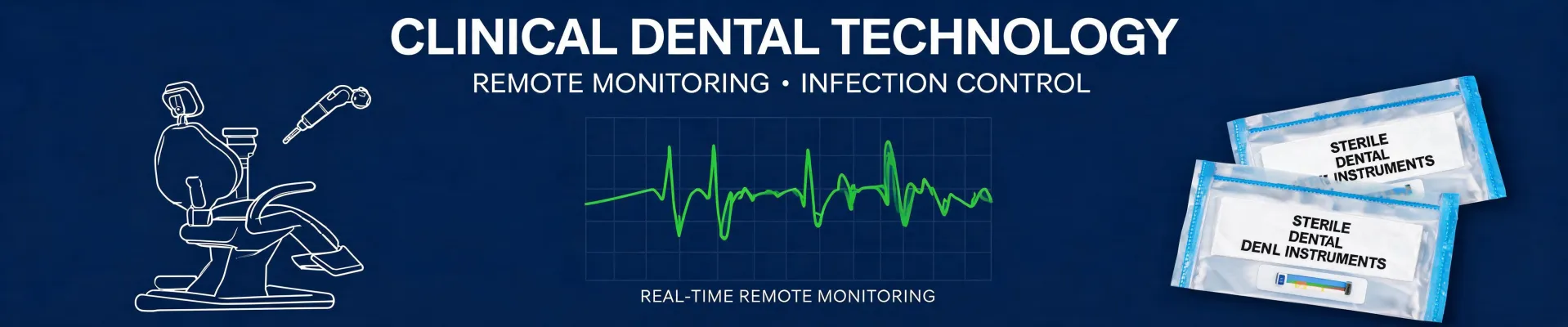
This is where the “value over price” argument becomes most critical—because a failure here can shut down an OR and risk patient safety. How to sterilize surgical instruments properly depends on your case volume, instrument types, and regulatory audit schedule.
Many facilities still rely on the “local service is faster” mentality. This was true 10 years ago when digital options were limited. Today, a well‑organized remote vendor with validated remote monitoring can often beat a disorganized local one.
From my experience: We once received a batch of 120 steam sterilization trays where the temperature sensor readings were off by 2°C against our spec (tolerance: ±0.5°C). The vendor claimed it was “within industry standard.” We rejected the batch, and they redid it at their cost. Now every contract includes the specific temperature mapping report requirement.
Three things you must verify for sterilizers:
- Cycle validation data – Does the vendor provide independent biological indicator (BI) test results? Per AAMI ST79:2023, you need three consecutive clean cycles with no growth.
- Water quality – Some low‑cost models accept tap water; but if your water has high mineral content, you'll need a filtration system (additional $3,000–$8,000).
- Service rep proximity – I'm serious—if a sterilizer goes down, you want a tech within 2 hours. I've seen facilities lose a full day of surgery because the service rep was 6 hours away. (Cost of one lost OR day: $20,000–$50,000.)
How to determine which scenario applies to you
Here's a quick diagnostic:
- You're in Scenario A if the equipment costs over $50,000, has proprietary software or consumables, and requires specialized training.
- You're in Scenario B if the device is networked, used by multiple staff, and interacts with your EHR.
- You're in Scenario C if the equipment directly impacts patient safety and regulatory compliance (i.e., sterilization, anesthesia delivery, etc.).
Of course, many purchases overlap. An OCT system is both high‑cost and requires training (A+B). A bedside monitor may also connect to a central station (B+C). The point isn't to force a single label—it's to recognize which hidden costs matter most for your situation.
I've only worked with mid‑sized hospitals (200–400 beds). I can't speak to how these principles apply to large academic medical centers with dedicated biomedical engineering teams. But if you're in a similar setting, I'd start by asking the vendor for a 3‑year TCO model and a list of three recent clients you can call. That's saved me more than once (ugh, I wish I'd done that on my first big imaging purchase—I'm still paying for that mistake).
Pricing and regulatory data referenced as of December 2024. Verify current requirements with your compliance officer and local regulatory body.

Elena Varga
Elena Varga is a medical imaging systems analyst covering CT scanners, MRI systems, ultrasound platforms, digital radiography, mammography, and ophthalmic imaging equipment. She references IEC 60601-2-44 for CT safety and essential performance while examining CTDIvol, dose-length product, spatial resolution, slice thickness, field uniformity, throughput, uptime, and DICOM interoperability. Her work helps radiology leaders, medical physicists, biomedical engineers, and procurement teams compare image quality, radiation management, workflow integration, serviceability, and lifecycle cost.