Medical Imaging in Chattanooga: What It Is, Why It Matters, and How to Choose Equipment (From an Admin Buyer)
2026-05-28 by Jane Smith
Here’s the short version for decision-makers: Medical imaging is the set of technologies used to see inside the human body without surgery. If you're setting up or upgrading a practice in Chattanooga—a dental office like Castle Dental, a new clinic, or a home care service—you need to understand the big three modalities (X-ray, ultrasound, MRI/CT) before you talk to any vendor. I’ve processed purchase orders for all of them, and the single biggest mistake I see is buying a machine for its specs without understanding how it fits your actual patient flow.
Let me back up. I’m the office administrator for a mid-sized medical group here in Chattanooga. We have three clinic locations, roughly 400 employees in total. I handle all the equipment procurement—imaging machines, sterilization gear like autoclaves, patient monitoring systems, even the portable oxygen concentrators for home care. My annual equipment budget runs about $1.2M across roughly a dozen vendors. I report to both our operations director and our finance lead. When I took over purchasing in 2020, I walked into a closet full of invoices that made no sense. I’ve learned the hard way what works and what doesn’t.
First, What Is Medical Imaging? (For Non-Radiologists)
Medical imaging is essentially creating a visual representation of the interior of a body for clinical analysis. The four most common types you'll deal with in equipment procurement are:
- X-ray (Radiography): The oldest and most common. Uses ionizing radiation to create images. Inexpensive, fast, great for bones and chest. In a dental practice like Castle Dental, this is your panoramic and periapical machines.
- Ultrasound (Sonography): Uses high-frequency sound waves. No radiation. Excellent for soft tissue (obstetrics, abdominal, cardiac). The machines range from compact cart-based units to handheld devices.
- CT (Computed Tomography): A specialized X-ray that creates cross-sectional slices. More radiation than X-ray, but provides detailed 3D information. The go-to for trauma, cancer staging, and complex fractures.
- MRI (Magnetic Resonance Imaging): Uses strong magnetic fields and radio waves. No ionizing radiation. The gold standard for soft tissue detail—brain, spine, joints, and ligaments.
What most people don't realize is that 'which one is best' is the wrong question. The right question is: Which one is best for your patient mix, your space constraints, and your budget?
Why This Matters for a Chattanoonga Practice
Chattanooga's healthcare ecosystem is diverse. You've got Erlangen Health System on one end, doing the full spectrum of high-acuity imaging (multiple 16+ slice CTs, high-field MRIs, special procedures). Then you have smaller clinics, standalone dental practices, and home care providers. If you're a home care provider looking at a portable oxygen concentrator, your imaging needs are zero. But if you're a dental practice like Castle Dental that does implants, you absolutely need a reliable panoramic X-ray. If you're a new orthopedic clinic, you might want a 1.5T MRI, but your budget might only stretch to a digital X-ray and an ultrasound initially.
I'm not a radiologist or a biomedical engineer, so I can't speak to the physics of magnet strength or the latest advances in photon-counting CT detectors. What I can tell you from a procurement perspective is how to evaluate vendors, negotiate pricing, and avoid getting burned on service contracts—which is where the real cost of imaging equipment lives.
The Hidden Costs of Medical Imaging Equipment
Here's something vendors won't tell you: the purchase price is often less than 60% of the total cost over five years. The rest is service and consumables. I have a story that still makes me cringe.
In 2021, we bought a refurbished GE Brivo CT325 for our urgent care clinic. The sales rep convinced us it was a steal at $45,000—a third of the new price. What they didn't emphasize was the annual service agreement: $18,000 per year for full coverage (preventive maintenance, all repairs, inclusive of X-ray tube replacements). The tube itself, if it fails out of warranty, costs $25,000 installed. We bought the machine with a basic warranty (one year). By year two, the quarterly PM visits alone were $1,200 each, and we had two tube failures in three years. The total cost of ownership over five years was closer to $110,000. The 'cheap' option wasn't cheap.
To be fair, refurbished equipment can be a great value if you budget for the service contract upfront. The key is to ask: 'What is the all-in annual service cost, and what does it cover?' Don't accept 'We'll provide a quote'—get it in the initial proposal.
What About Autoclaves and Other Sterilization?
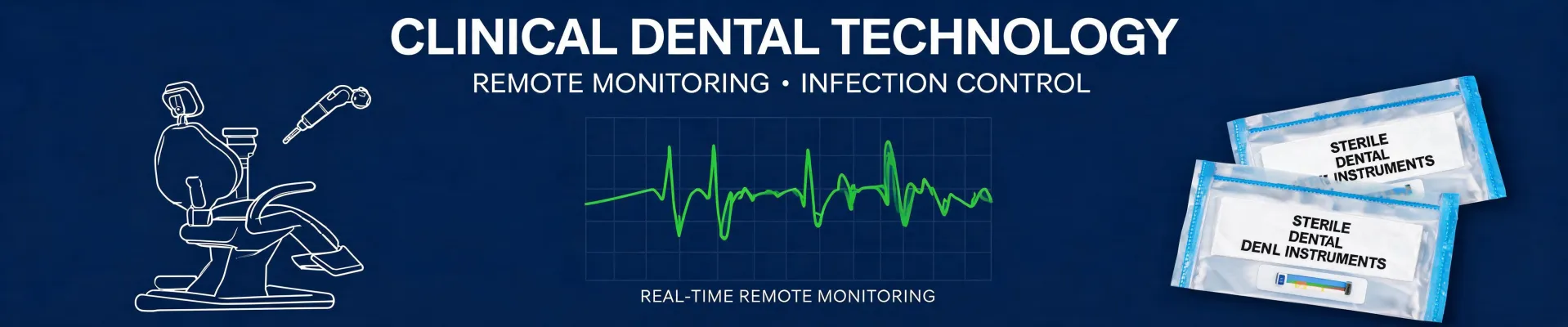
If you're buying an imaging machine for a dental or surgical practice, don't forget the autoclave. You can't produce images if your instruments aren't sterile. In our main clinic, we use three large Tuttnauer autoclaves. The upfront cost is modest ($3,000-$8,000 each), but the ongoing costs—chemical indicators, biological indicators (spore tests), maintenance, and replacement gaskets—add up. I'd recommend budgeting roughly $1,500 per autoclave per year for consumables and service.
Most buyers focus on the big-ticket imaging machine and completely miss the supporting equipment that makes it operational. It's like buying a high-end production printer and forgetting the ink and paper.
How to Make a Decision (My Framework)
The question everyone asks is 'What's the best machine?' The question they should ask is 'What's the best machine for my specific patient volume and condition mix?'
Here's the framework I use when evaluating quotes. It's not fancy, but it works:
- Define your clinical needs first. Are you doing routine sports injuries? You need an MRI or ultrasound. Acute fractures? A good X-ray is enough. Dental implants? A high-quality CBCT (cone beam CT) from a brand like Planmeca or Carestream is essential.
- Match the equipment to your throughput. A high-end multi-slice CT (128 slices) is overkill for a clinic that does 10 scans a day. A 16-slice CT or a 1.5T MRI is often the sweet spot for medium-volume outpatient centers.
- Check space and facilities. An MRI requires a dedicated room with RF shielding, a helium cooling system, and specific weight-bearing floors. A portable X-ray can go in any exam room. We moved an ultrasound into a converted storage closet and it worked perfectly.
- Get the total five-year cost. Ask for a quote that includes: purchase price, shipping/rigging, installation, site preparation, warranty (length and scope), annual service contract cost, per-use costs (if any, like contrast agents), and estimated consumables.
- Verify their service capability in Chattanooga. A machine is only as good as the service tech who can fix it. Ask: How many service engineers do you have within 50 miles? What's the average response time for a breakdown? Is the phone answered by a live person or an outsourced call center in India? We had a Siemens MRI down for three days because the nearest service tech was in Nashville.
Let me give you a concrete example of how this plays out. In 2024, our operations director wanted to add a dedicated dental CT scanner (a CBCT) for Castle Dental. The recommended list included brands like Sirona, Planmeca, and NewTom. The cheapest quote was a brand I'd never heard of from a distributor in Texas. It was $30,000 less. I asked for a service plan. They said 'We use local third-party contractors.' I then called the three largest imaging service companies in Chattanooga. Two of them had never heard of this brand. The third said they could service it but their standard rate was $3,000 per call, plus parts, and they couldn't guarantee they'd have the processor board in stock. The Planmeca quote was $25,000 more, but it came with a five-year on-site warranty covering all parts and labor. The extra $5,000 a year for service was worth it to not have a broken machine for two weeks.
When a High-End Machine Isn't the Answer
I'd recommend the premium brands (GE, Siemens, Philips, Planmeca) if you have high patient volume, complex clinical needs, and the budget to support the service contracts. They're the gold standard for a reason. But if you're a small dental practice doing 10 procedures a day, or a small clinic doing basic X-rays, you might be better off with a mid-tier manufacturer (Carestream, Fujifilm, or a quality refurbished unit). A 6-slice CT is fine for a small practice, and the savings can go into the service contract.
This gets into territory that's more about business modeling than procurement, which isn't my core expertise. I'd recommend consulting with a radiologist or a healthcare financial analyst for a detailed revenue projection. What I can tell you is that the worst outcome isn't buying the wrong machine—it's buying the right machine without a plan to keep it running.
And if you're in Chattanooga and need a reliable service contact, the best I've found is [a small local company]—they're not perfect, but they've never left us waiting more than 24 hours for a non-urgent repair. For the big stuff, we still use the OEM contracts.

Jane Smith
I’m Jane Smith, a senior content writer with over 15 years of experience in the packaging and printing industry. I specialize in writing about the latest trends, technologies, and best practices in packaging design, sustainability, and printing techniques. My goal is to help businesses understand complex printing processes and design solutions that enhance both product packaging and brand visibility.