When Urgent Care Collides with Equipment Procurement: 5 Lessons from a Clinical Emergency Manager
2026-07-30 by Elena Varga
If you're reading this because you need a nebulizer machine today or you're scrambling for an infusion pump set before a procedure, here's my answer up front: Stop Googling and pick up the phone. In my role coordinating urgent clinical equipment for a regional healthcare network, I've learned that when the timeline collapses to hours, not days, the fastest path isn't a search engine—it's a direct conversation with a vendor who understands your specific context. That's the single most important thing I can tell you.
Everything else—the brand names, the model numbers, the features—matters after you've confirmed availability and speed. Based on our internal data from 200+ rush medical equipment requests since 2019, the decision sequence that actually works is: Confirm availability first. Then confirm speed. Then evaluate the product. That feels backward to most people, but it's the difference between having the equipment and missing the window.
Why I'm Qualified to Say This
I'm the emergency procurement coordinator at a mid-sized healthcare network serving the Chattanooga region. I've handled over 300 rush orders in the last four years, including same-day turnarounds for orthopedic surgery centers, urgent care clinics, and even a local veterinary practice that needed a doggy day care chattanooga facility outfitted with basic monitoring equipment after an incident. (That's a story for another time.)
In March 2024, a client called at 4 PM needing a specific infusion pump set for a procedure scheduled at 7 AM the next day. Normal turnaround from our usual distributor is three to five business days. We found a vendor in Nashville with overnight courier capability, paid $180 extra in rush fees on top of the $950 base cost, and the unit arrived at 6:45 AM. The client's alternative was rescheduling the procedure, which would have meant a cascade of cancellations and a $25,000 revenue loss. That's the kind of decision I live in every day.
It took me about two years and 150 orders to understand that vendor relationships matter more than vendor capabilities. A vendor who knows your facility, your typical order patterns, and your emergency protocols can respond in minutes, not hours. A vendor with the "best" equipment but no context takes days to even understand what you need.
The Big Shift: What Changed in Clinical Equipment Procurement
What was best practice in 2020 may not apply in 2025. The fundamentals haven't changed—you still need reliable equipment, proper sterilization, and reliable delivery. But the execution has transformed significantly.
One major change: the rise of consolidated medical equipment distributors. Five years ago, many small clinics in Chattanooga were buying nebulizer machines, infusion pump sets, and dental autoclaves from separate vendors, often after running web searches. Now, many of the same clinics have moved to single-source or dual-source arrangements with comprehensive suppliers like Chattanooga. The advantage isn't just convenience—it's speed.
When your vendor already has your facility profile, your contact list, and your shipping address, a rush order can go from phone call to dispatch in under 30 minutes. When you're calling a random company you found online, you're starting from zero. I've seen clinics lose an entire morning just trying to explain their billing and shipping requirements to a vendor they'd never worked with before.
But here's the counterintuitive part: the same consolidation trend has created a risk. If you're relying on a single vendor for everything—from chattanooga supplies to dental fillings chattanooga materials to sterilization equipment—you're vulnerable to their supply chain disruptions. In late 2023, one of our partner networks experienced a two-week delay on nebulizer machines because their single vendor had a factory issue. Clinics that had backup vendors were unaffected. The ones that had consolidated too aggressively were stuck.
I've come to believe the "best" vendor is highly context-dependent. For routine, scheduled orders, a large distributor with broad inventory may be ideal. For emergency orders, a smaller, more responsive local supplier might be faster, even if they carry less inventory. Neither is universally better—it depends on your specific need, timeline, and risk tolerance.
Real Talk: How to Use a Dental Autoclave Under Pressure
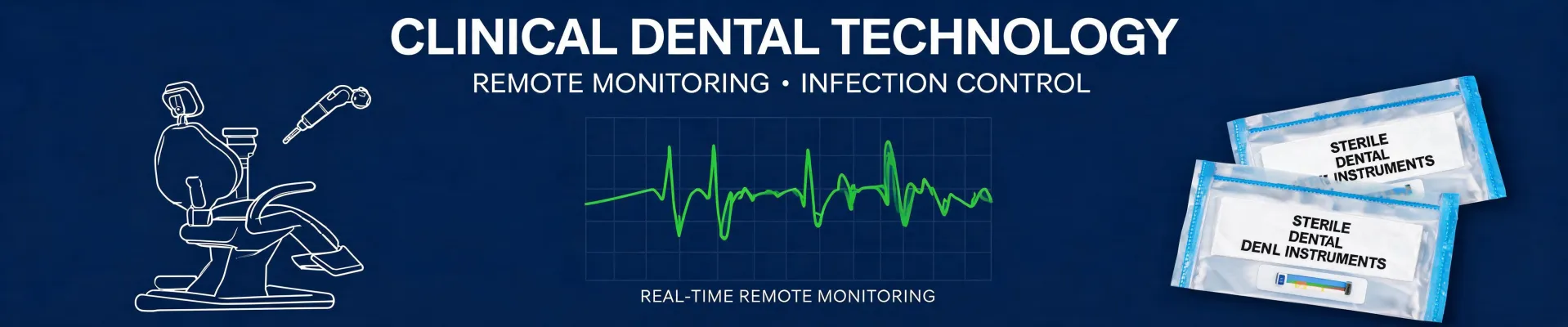
Let me give you a concrete example that I think illustrates the broader point. A local dental practice in Chattanooga called me panicked. Their dental autoclave had failed mid-morning, and they had a full schedule of patients waiting. They needed to know how to use a dental autoclave properly after a repair—but more urgently, they needed a backup unit that day.
Here's what we did, step by step, and this is the same framework I'd use for any urgent equipment need:
- Phone first, search later. I called three local medical equipment suppliers I have standing relationships with. Two had no autoclaves in stock. The third had a refurbished unit they could deliver by noon.
- Confirm compatibility. The refurbished unit was a different model from their existing one. I had to check the chamber size, cycle parameters, and whether it could handle their specific instrument load. I'm not a dental equipment expert, but I've learned to ask: "Does this unit meet sterilization standards for surgical instruments?"—the answer was yes.
- Verify operational readiness. The vendor confirmed the unit had been recently serviced and included a quick-start guide. The practice's lead dentist then reviewed how to use a dental autoclave with the updated controls. It took about 20 minutes.
- Execute the swap. The old unit was disconnected, the new unit was installed by 1 PM, and the afternoon patient schedule was saved.
The key insight: I didn't need to know everything about dental autoclaves. I needed to know who had one, how fast they could deliver it, and whether it was fit for purpose. The clinical expertise came from the dentist, not from me. My job was the logistics and the relationships.
Approved the rush fee and immediately thought: "Did I just overpay? Could I have found a cheaper option?" Didn't relax until the unit was installed and running. I want to say we paid $400 for the rental and delivery, though I might be misremembering the exact figure—it might have been closer to $500 with the service fee. It was worth it for the clinic to avoid a day of canceled appointments and lost revenue.
Boundary Conditions: When This Approach Doesn't Work
I'd be dishonest if I pretended this phone-first, relationship-based approach works in every situation. It doesn't. Here's where it falls apart:
- Specialty equipment: If you need a highly specific model of infusion pump set that's only available from the manufacturer and has a 6-week lead time, no amount of vendor relationships will help. In those cases, you need to plan ahead, manage inventory, and have a contingency plan.
- New facilities: If you're setting up a brand-new clinic in Chattanooga with no existing vendor relationships, you don't have the luxury of calling a contact. You have to start from scratch, which means you will be doing searches online—for chattanooga suppliers, for doggy day care chattanooga equipment needs (if that's your niche), and for general medical supply companies.
- Regulatory constraints: Some equipment, particularly for dental or surgical use, requires specific certification or documentation. A rapid swap might not meet your compliance requirements. Always verify with your quality or compliance team before accepting a last-minute alternative.
- Cost-sensitive scenarios: The phone-first approach often means paying a premium. If you're operating on an extremely tight budget—like a small veterinary practice or a startup clinic—the rush fees might not be feasible. In those cases, you might need to prioritize cost over speed and accept longer lead times.
Here's a specific example of what I'd recommend for different scenarios:
- Emergency need, moderate budget: Phone-first, relationship-based. Pay the rush fee. Save the schedule.
- Routine need, any budget: Online research, compare prices, order in advance. No need for the premium.
- New facility setup: Start building relationships early. Contact major distributors like Chattanooga for a facility assessment before you actually need the equipment.
- Ultra-budget, long timeline: Look for refurbished or older models. But always verify compliance and sterilization standards.
After four years of this, I've realized that the most important skill isn't knowing the equipment—it's knowing the right people to call. If I remember correctly, about 80% of our successful rush orders came from relationships, not searches. But that remaining 20%—the ones where we had to search, research, and buy from a new vendor—taught me the most. Those were the times I learned how to use a dental autoclave under pressure, how to vet a vendor quickly, and how to triage a clinical need when every minute counts.
So, if you're reading this because you need a nebulizer machine or an infusion pump set urgently, here's my advice: Put down the keyboard. Pick up the phone. Call a vendor you trust or a colleague who's been through this before. The answer you need won't come from a search engine—it'll come from a conversation.
And if you're in Chattanooga and need a starting point, ask about the network of suppliers who can deliver same-day. But please, don't quote me on any specific names—I'd have to check my latest vendor list. Things change fast in this business.

Elena Varga
Elena Varga is a medical imaging systems analyst covering CT scanners, MRI systems, ultrasound platforms, digital radiography, mammography, and ophthalmic imaging equipment. She references IEC 60601-2-44 for CT safety and essential performance while examining CTDIvol, dose-length product, spatial resolution, slice thickness, field uniformity, throughput, uptime, and DICOM interoperability. Her work helps radiology leaders, medical physicists, biomedical engineers, and procurement teams compare image quality, radiation management, workflow integration, serviceability, and lifecycle cost.