Chattanooga Medical Equipment: What a Quality Inspector Checks Before You Buy a Dental X-ray or Surgical Energy Device
2026-09-04 by Elena Varga
I'm a quality and compliance manager at a medical equipment company in Chattanooga. I've spent the last six years reviewing equipment specs and supplier claims. If you're about to buy a dental x-ray machine, a surgical energy device, or a clinical chemistry analyzer, here's the first thing I'd tell you: the spec sheet is a starting point, not a guarantee.
Basically, a spec sheet tells you what a device did in a controlled test. It doesn't tell you what it does after a sensor cable has been flexed thousands of times, after a reagent lot changes, or when the surgical team is two hours into a long case. Quality control is what catches the gap between a lab setting and your real workplace.
In a typical year, I review 200 or more product submissions. In our Q1 2024 audit, about 6% of first deliveries were rejected because a specification was visibly off. One vendor claimed its sensor was within industry standard, but the test report did not match our tolerance. We sent the whole batch back and made them redo it at their cost. That discipline came after a mistake. We didn't have a formal approval process for alternative components, and I approved a 'functionally equivalent' valve for a rehab device that wore out too quickly. What I mean is, a tiny definition gap in procurement can turn into a performance problem later.
Now every substitute component goes through the same test sequence as the original, including accelerated wear testing. At least, that's been my experience: adding the review step slows us down a little, but it saves us from two or three bad releases each cycle.
What does Chattanooga equipment have to do with this?
If you search 'chattanooga medical equipment,' you might mean the rehabilitation-device company that has used that name for decades, or you might simply mean buying medical equipment in Chattanooga, Tennessee. I work with both meanings daily. The Chattanooga-brand product line is popular in physical therapy and rehabilitation clinics—think electrical stimulation, ultrasound, and therapeutic exercise equipment. The same quality questions apply to those units as to any other capital purchase: How long is the response time for service? Are spare parts available? Does the vendor provide training? Do they tell you what the device is not designed for?
A reputable company can answer those questions directly. If it can't, the name on the box is just decoration.
What is clinical chemistry, from a quality perspective?
Googling 'what is clinical chemistry' gives you a standard answer: clinical chemistry is the branch of laboratory medicine that measures chemicals in blood, urine, and other body fluids. It's the testing that tracks cholesterol, glucose, enzymes, and electrolytes. But I recommend thinking about it in terms of sample flow. The analyzer is only the last mile. Specimens can be mislabeled, collected in the wrong tube, left too long at room temperature, or exposed to heat in transit. A good analyzer won't fix a bad sample.
That's why local lab services deserve the same scrutiny. Any Lab Test Now Chattanooga is one option for people who want direct access to lab panels without a doctor's referral, and I've seen their results coordinate well with provider care. But the quality of any lab test depends on the pre-analytic process: correct tube, correct handling, correct transport, and correct quality-control samples. Don't assume a clean waiting room means the controls are run properly. Ask how often the lab runs quality materials and what happens when a result fails review.
Dental X-ray machine: More than image quality
Most practices searching for a new dental x-ray machine start by asking about image resolution. That matters, but I would add more checks. A digital sensor may have great resolution but a fragile cable connection. If the cable fails and the practice is fully booked, that is a quality failure even though the X-ray tube itself works.
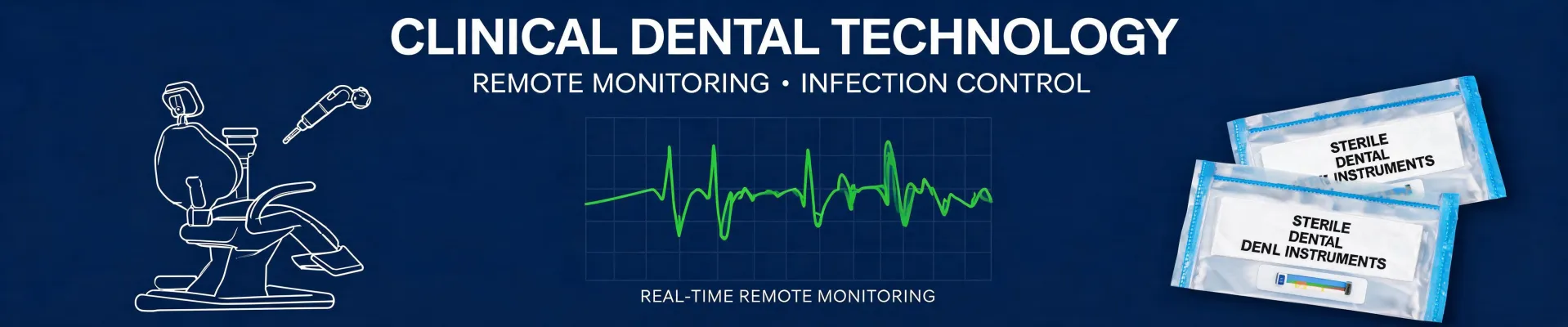
I also look at infection control. Sensor barriers, removable cassettes, and equipment surfaces need to be compatible with your cleaning protocols. If a device can't tolerate repeated wiping and disinfection, it will fail early in real use. Insist on calibration documentation and a simple way to log daily or weekly QC checks. A new dental x-ray machine should come with a plan for service, not just an installation visit.
Surgical energy device: Don't rely on a testimonial
The stakes are higher with a surgical energy device. The unit must respond safely as tissue changes—from a dry surface to a wet field, from thin tissue to dense tissue. If tissue sticks or thermal spread is too high, the consequences can be serious. I would rather see a manufacturer produce detailed bench-test data and clinical literature than rely on one surgeon's endorsement.
Per FTC advertising guidance (ftc.gov), claims must be truthful and substantiated. That applies to B2B medical marketing too. Ask for test protocols, training requirements, and after-sales support. Also train your team. We've seen device problems that were really training problems: nurses did not know the correct return-electrode placement, so the unit alarmed constantly. The device didn't need a replacement; the process did.
I know the phrase 'trampoline park chattanooga' has nothing to do with surgical devices at first glance. Stay with me. Every trampoline park that stays open has a safety rhythm: staff inspect jump zones, check foam pits, rotate jumpers, and record incidents. You rarely know if a park is safe by looking at one trampoline. The same is true for a dental x-ray machine or a surgical energy device. Safety comes from consistent process, not one-time inspection.
Bottom line: trust a device only when the supplier can show you how it behaves at the edges. If they can, you've found a partner. If they can't, you've only got a datasheet.
Where I draw the line
I'm not going to recommend one dental x-ray machine or one surgical energy device because no single device is best for every situation. If you run a small dental practice with ten X-rays a day, a machine built for a high-volume imaging center is overkill. If your hospital performs complex hepatobiliary surgery, a basic outpatient surgical energy device probably won't meet your surgeons' demands. A Chattanooga rehab device is a valuable tool for certain treatment protocols, not a replacement for clinical judgment.
This post reflects what I knew as of January 2025. Local lab regulations, FDA classifications, and product lines can change. Check current claims, ask for written documentation, and don't sign until the vendor has answered the edge-case questions that matter most to your staff and your patients.

Elena Varga
Elena Varga is a medical imaging systems analyst covering CT scanners, MRI systems, ultrasound platforms, digital radiography, mammography, and ophthalmic imaging equipment. She references IEC 60601-2-44 for CT safety and essential performance while examining CTDIvol, dose-length product, spatial resolution, slice thickness, field uniformity, throughput, uptime, and DICOM interoperability. Her work helps radiology leaders, medical physicists, biomedical engineers, and procurement teams compare image quality, radiation management, workflow integration, serviceability, and lifecycle cost.