The Real Cost of Low-Quality Medical Equipment: From Slit Lamps to Hospital Disinfectants
2026-08-05 by Jane Smith
In my role coordinating medical equipment for hospitals, clinics, and private practices, I handle rush orders. A lot of them. In March 2024, a clinic called at 4:30 PM. Their slit lamp had failed—the illumination arm was dead—and they had a full schedule of corneal exams at 8 AM. Normal replacement lead time was three weeks. We found a compatible unit, paid $600 in expedited shipping on top of the $4,100 base price, and a courier had it on site by 7:40 AM. The clinic didn’t miss a single patient.
I could tell that story as a win for rush logistics. But the more urgent problem wasn’t the delivery. It was why they needed an emergency replacement at all. Oh, and I should mention: the original slit lamp was only 18 months old.
The Surface Problem: Budgets and Deadlines
The conversation usually starts with price. "We need a slit lamp, something around $5,000." Or "What’s the cheapest hospital disinfectant that still qualifies?" I get it. Budgets are tight. Paying more for a piece of equipment with the same basic specs feels like waste.
But after 7 years and roughly 200 rush orders, I’ve come to believe that the price tag is the least useful part of the conversation. The real cost of cheap equipment is invisible until the moment it matters.
The Deeper Problem: We Treat Clinical Tools Like Commodities
Here’s the thing: we have convinced ourselves that medical equipment is interchangeable. A slit lamp is a slit lamp, right? A hospital disinfectant kills germs, right? An X-ray captures an image, right?
No. Put another way: the label on the box tells you what the device is. It doesn’t tell you what the device does to clinical judgment.
Take medical imaging. What is medical imaging? According to the FDA (fda.gov, accessed January 2025), medical imaging covers technologies used to view the human body for diagnosing, monitoring, or treating medical conditions—including X-ray, CT, MRI, ultrasound, and nuclear medicine. That’s the formal definition. Here’s the operational one: medical imaging is a diagnostic conversation. An image is a statement. The clinician reads it, forms a judgment, and acts. If the statement is blurry, the judgment is uncertain. Uncertainty leads to repeat scans, extra consultations, and delayed decisions. That’s not a technical problem. That’s a clinical problem. And in a private practice, it’s a brand problem.
Consider the slit lamp again. On paper, two units can look almost the same: microscope, bright light, chin rest, joystick. But what happens when an ophthalmologist is looking for a corneal foreign body late at night in a patient who is in pain? The clarity of the optics, the uniformity of the beam, the stability of the joystick—those determine whether the doctor sees the edge of the object or sends the patient to another clinic across town. The cheaper unit might do fine for routine exams. It fails exactly when it’s needed most. That’s when patients notice. And patients talk.
Disinfectants, Dental Imaging, and the Invisible Quality Bar
The same logic applies to hospital disinfectant. A hospital disinfectant isn’t just a cleaning product; it’s a safety protocol. Per CDC’s Guidelines for Disinfection and Sterilization in Healthcare Facilities (cdc.gov, 2008), low-level disinfection for noncritical surfaces requires an EPA-registered hospital disinfectant used according to label directions. If the label is confusing, if the contact time doesn’t fit your workflow, if the sales rep says "it’s basically the same" but the product isn’t on your required pathogen list—then the true cost is measured in hospital-acquired infections. That’s not a line item. That’s trust.
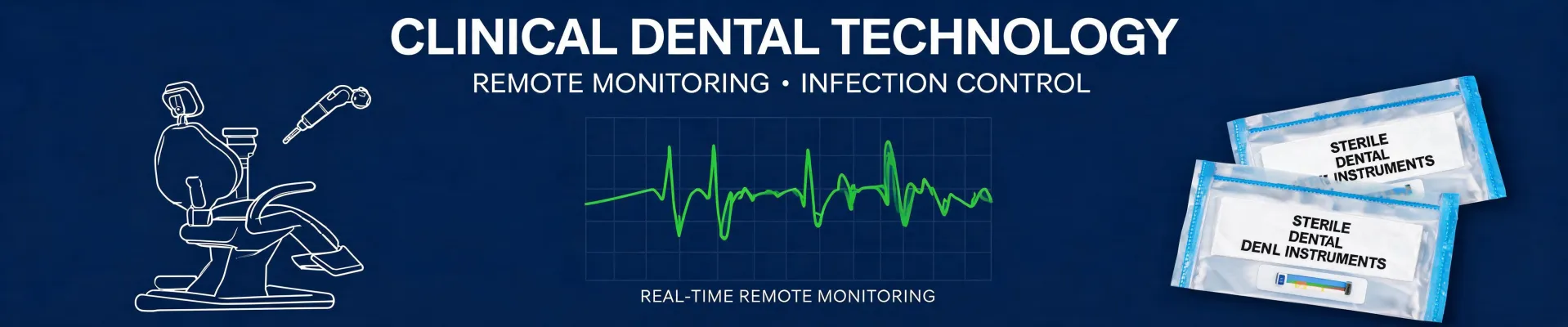
And the same principle applies outside the hospital walls. A Chattanooga dental home, for example, relies on the quality of its imaging equipment every day. According to the American Academy of Pediatric Dentistry (aapd.org, 2023), a dental home is the ongoing relationship between the dentist and the patient, inclusive of all aspects of oral health care delivered in a comprehensive, continuously accessible, coordinated, and family-centered way. That relationship depends on clear diagnoses. If intraoral X-ray images are inconsistent, the dentist faces an impossible choice: re-expose a child to radiation or make a judgment on a subpar image. That’s the opposite of coordinated care.
For home care Chattanooga providers, the stakes are even more personal. There’s no biomedical engineer down the hall. A caregiver must trust a device to work the same on day 200 as it did on day 1. If it doesn’t, a patient falls, a wound is missed, or a medication isn’t delivered. Quality isn’t luxury. It’s risk management.
The Real Price of "Almost Good Enough"
Let’s get concrete about cost. Say a premium slit lamp costs $3,000 more than the budget option. And say the cheaper one produces an image that’s hard to interpret in 1 out of every 20 exams. A busy ophthalmologist does 20 slit lamp exams a day. That’s one uncertain judgment per day. If each uncertainty leads to just one additional referral or repeat exam that costs $200, the $3,000 premium pays for itself in 15 days. That math ignores the patient’s wasted time, their lost confidence, and the email to their employer. That’s the real price.
I have mixed feelings about the phrase "hospital-grade." It’s overused. But there’s a reason the label exists. The difference between a $700 slit lamp and a $7,000 slit lamp isn’t vanity. It’s repeatability. A clinic can survive a sticky joystick for a year. It cannot survive an unreliable light source when a patient’s eye is swollen and painful. Period.
Every device you put in front of a patient is a brand statement. A wobbly slit lamp says we’re cutting corners. A blurry X-ray says we don’t notice. A confusing disinfectant label says safety is optional. Patients won’t remember the model number. They’ll remember whether they felt cared for. They’ll tell their family. They’ll write a review. In healthcare, quality perception isn’t marketing—it’s a clinical outcome.
The Short Fix: Buy Outcomes, Not Devices
So what’s the fix? Stop buying devices. Buy outcomes.
Before you sign a purchase order, ask three questions:
- Will this help a clinician make a clearer decision at the exact moment of highest pressure?
- Can a caregiver or dental team maintain it without an engineer down the hall?
- If it fails, what does that failure actually cost—not the repair invoice, but the lost trust, the delayed diagnosis, the patient who walks out?
If those questions give you pause, the cheapest quote is the most expensive option. I know that sounds like a cliché. But I learned it on a Friday night, with a slit lamp and a waiting room full of patients. After 200 rush orders, I no longer think the emergency is the deadline. The emergency is the gap between what we bought and what the clinician actually needed. Quality closes that gap.
The next time someone asks you whether quality or price matters more? Answer: both. But quality is what keeps the price from being wasted. That builds a brand. That builds trust. That’s the whole thing. Simple.

Jane Smith
I’m Jane Smith, a senior content writer with over 15 years of experience in the packaging and printing industry. I specialize in writing about the latest trends, technologies, and best practices in packaging design, sustainability, and printing techniques. My goal is to help businesses understand complex printing processes and design solutions that enhance both product packaging and brand visibility.